INSIGHT YOKESEN
Notes on AI, business execution, and the technology actually used.
Category
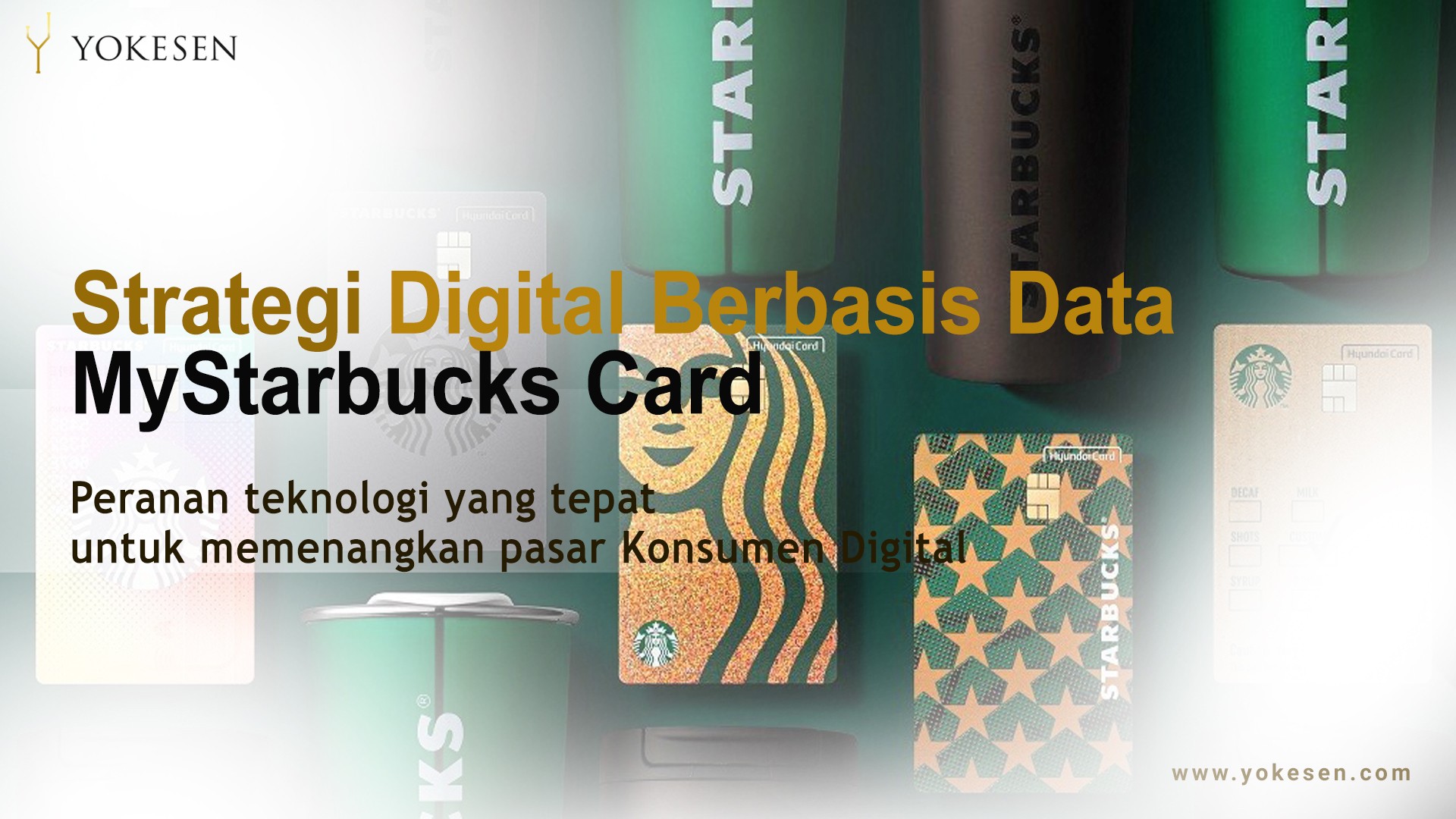
Have a My Starbucks Reward Card?
This card, which is also available in a digital version and is connected to the Starbucks Application, can only be used to buy coffee if the customer has a certain amount of money on the card.
From existing data, it is stated that customers do not hesitate to save their funds on Starbucks cards, to the point that it was recorded that $1.5 – $2 billion was saved in the My Starbucks Card application and cards in 2020. This illustrates the enormous level of trust placed in a #coffee brand, all for the sake of a Starbucks #brandexperience and all its conveniences.
This data-based digital omnichannel marketing strategy implemented by Starbucks provides a competitive advantage in how to compete with other brands in the same field. This strategy allows Starbucks to segment data to better target and build engagement with their customers.
Any brand's Digital Strategy must be diligent and implement technology to collect data from every #consumerjourney touchpoint across all marketing channels, both digital and offline. When this data is integrated and enhanced with a CRM or CDP system, brands can generate deep insights about who and where their customers are and what actions their customers will take next.
This strategy applies to both B2C and B2B businesses. The types of data that can be integrated usually include customer profiles and demographics, customer online shopping history, customer use of services and after-sales, and your customers' behavior in browsing your website.
Also read the article Coca Cola's Digital Strategy Wins Consumer Loyalty
08 Oct 2021
The term Omnichannel marketing is popular not from the digital side of a business strategy. But because that's what consumer behavior is like now.
Your brand's consumers interact and engage with your brand everywhere, across various channels and media, from one device to another, and at their own time.
Existing data must continue to be monitored and improved quickly, so that brands or businesses are able to keep pace and remain relevant to trends and consumer behavior.
Nowadays, consumers don't just compare product quality. Consumer insights show that consumers now expect a seamless brand experience, user-friendly websites and mobile apps, consistent brand service, personalized product choices and consumers want all of this quickly.
A business's Omnichannel Marketing Strategy is ideally able to connect all consumer user-journey data streams, integrating customer data, sales information, order distribution, delivery of goods, historical purchases and complaints, all in one place, such as in a CRM system.
This will also allow you to control and quickly identify when problems occur, thereby better optimizing business operations.
In an omnichannel strategy, there must be integration. Businesses are starting to see the importance of implementing marketplace integration, multiplatform integration, for data integration purposes. If you have the right dashboard, businesses will be able to monitor every customer activity with the brand and deliver what they expect.
With historical data on your customers through marketplace integration or multiplatform integration, for example when purchasing certain items, it allows you to find out demographic insights about your brand's loyal customers, create preferences, product references and campaigns that are most relevant and interesting for each of your consumers.
Don't forget to also read other articles about the importance of businesses going digital before it's too late.
07 Oct 2021

Your creative content is amazing, your offer builds interest, and your CTA (Call To Action) is also interesting. You run the advertised campaign (digital marketing language: optimized) well so that it brings in quite a lot of traffic and makes them click on your ad.
However, your landing page conversion rate is still very low? Where's the harm?
What is the real reason why visitors to your ad's landing page don't convert into potential buyers?
Landing pages with high conversion rates are very important for brands, especially those that sell products or services at fairly high prices.
Some important things that you should not forget include:
1. Expose your Unique Selling Point (USP). No! It's not about what the features of the product you offer are, let alone its function. Instead, target directly the problems or #painpoints that consumers may be facing right now, and explain how your product is the most effective and efficient solution!
2. Try scrolling your landing page. If in less than 1 minute you can't draw 1 important conclusion about what the landing page is, that means your landing page is too busy! Don't forget negative space so that your landing page is easy to read and comfortable for the eye.
3. Who are you targeting this landing page for. Make sure you know and are sure exactly what kind of #buyerpersona you are targeting with the landing page.
4. Place your CTA near the header, and not too far below. Today's consumer attention span is very short, so brands need to ensure that all campaigns and messages are easy to digest in the first 8 seconds consumers see them
Also read other articles, how about it how to optimize leads conversion to generate quality leads.
07 Oct 2021
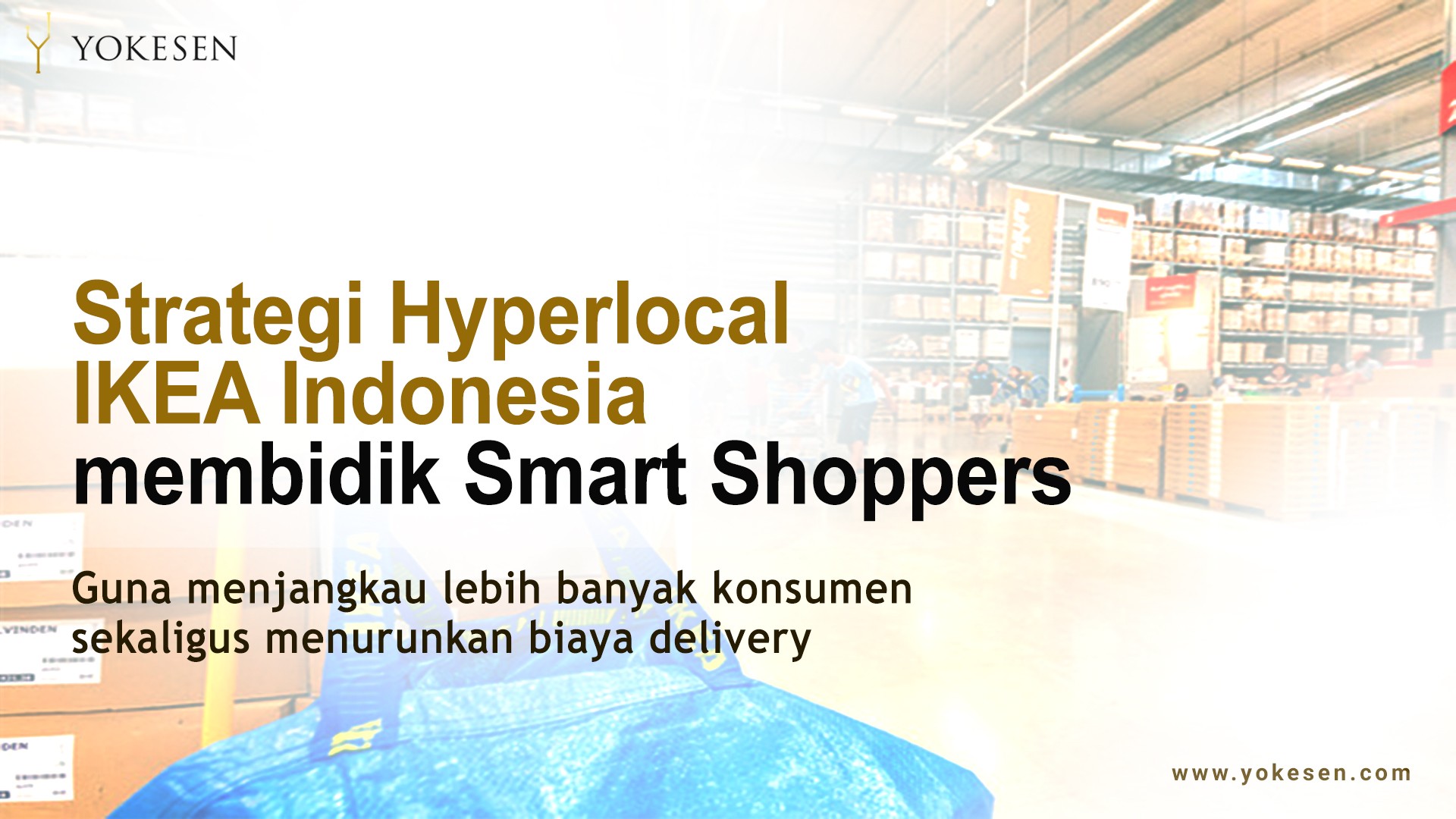
IKEA Indonesia moves to Hyperlocal to meet the needs of Indonesian Smart Shoppers? How can IKEA's Hyperlocal Strategy be implemented into an omnichannel solution to win Indonesian retail competition?
This Swedish furniture and household equipment retail company continues to strive to add facilities and provide added value to as many residents of residential areas as possible so they can enjoy shopping for IKEA products online.
Now consumers can choose goods delivery services according to their needs and budget, starting from delivering products directly to their home, or picking them up themselves at various Pick-up points to be able to enjoy free delivery promos from central IKEA to the nearest Pick-up Point from their home.
The presence of Pick-up Points is one of IKEA's commitments to expand accessibility, as well as offering lower and more affordable delivery costs for customers in several areas around Jakarta, Tangerang, Depok, Bogor and Bekasi. This marketplace solution is able to solve the problem of consumers who want to get their purchases immediately.
Uniquely, IKEA has also collaborated with local industry in Solo, Central Java by marketing local products made by craftsmen in Solo and Yogyakarta throughout Indonesia and IKEA also sells them on the international market.
Also read the article hyperlocal strategy in choosing fulfillment services or Warehouse Management as a solution to win digital commerce competition
06 Oct 2021
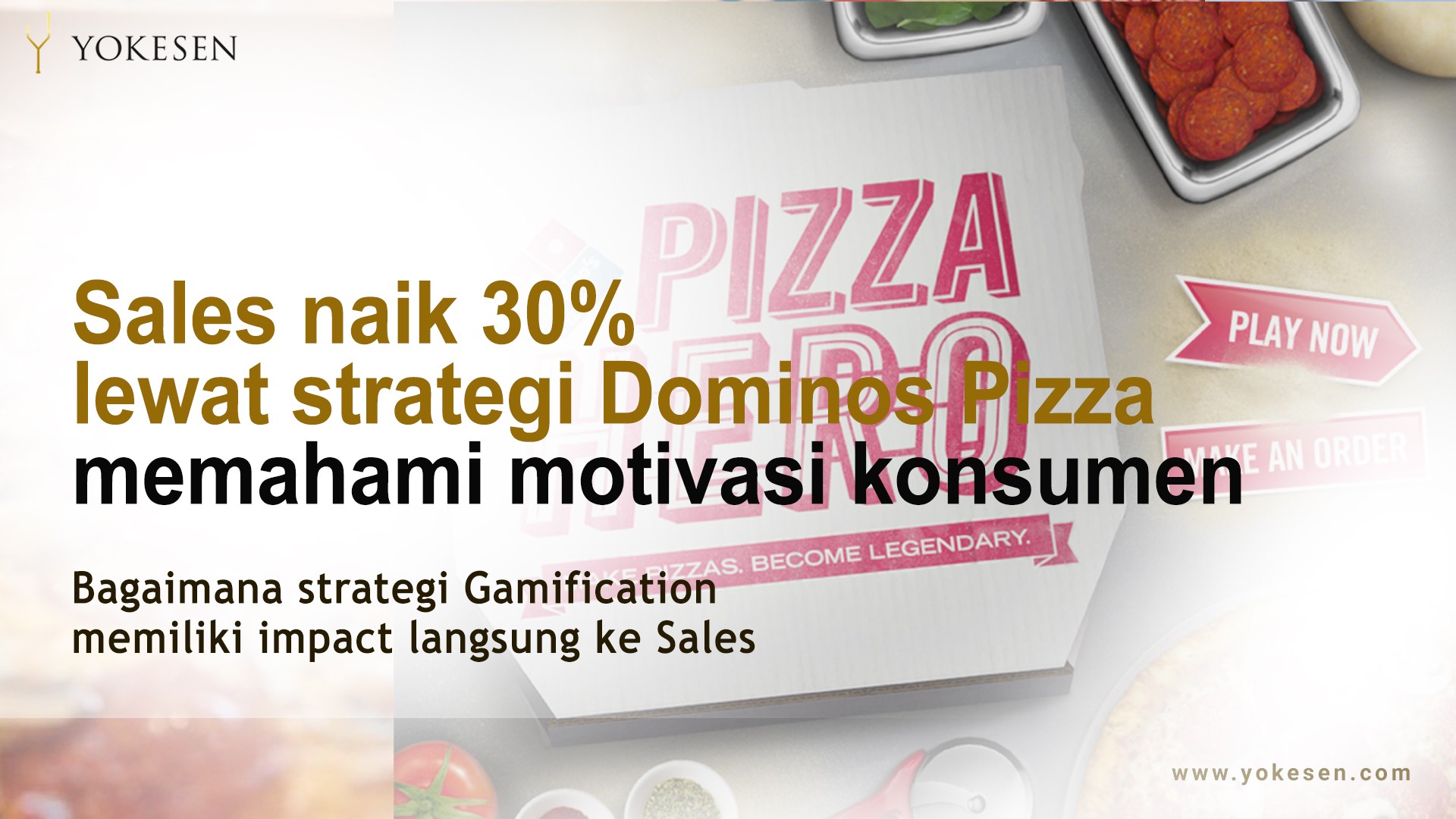
Back to discussing gamification.
More and more businesses are creatively implementing Gamification Marketing strategies to increase consumer engagement as well as their employee engagement strategies, which are designed in a human-oriented manner (i.e. designs that are optimized for human motivational purposes rather than for functional efficiency).
This time what we will discuss is one of the most interesting examples of implementing gamification strategies in the F&B (Food and beverages) industry, namely the #PizzaHero campaign by Dominos Pizza.
Even though the Pizza Hero campaign was developed solely as a consumer experience for fun, the result was an increase in sales of 30%.
There were more than 7 million pizzas made through the app which at that time was ranked 3rd in the app store after being downloaded 300,000 times.
Why has this Gamification been so successful?
1. The first factor, Dominos Pizza through its #PizzaHero gives consumers a feeling of achievement by giving them points and also an assessment score for how good the pizza they make is.
2. In addition, as users become more skilled at making pizza, it makes them feel like they have learned and mastered a new skill, namely making pizza (gamification elements: Self-development and achievement).
3. When users make pizza, they feel ownership of their work and are proud of their abilities (gamification elements: self-actualization & sense of ownership).
A gamification strategy that focuses on human motivation and consumer behavior, is able to provide a sense of self-development, social status, and a sense of ownership that can be shared with other users, and this is very dependent on the consumer's extrinsic motivation.
So it's not surprising that brand engagement here is built quite strongly.
Also read other insights around usage technology and digital strategy in the form of gamification which you can apply to your brand.
06 Oct 2021
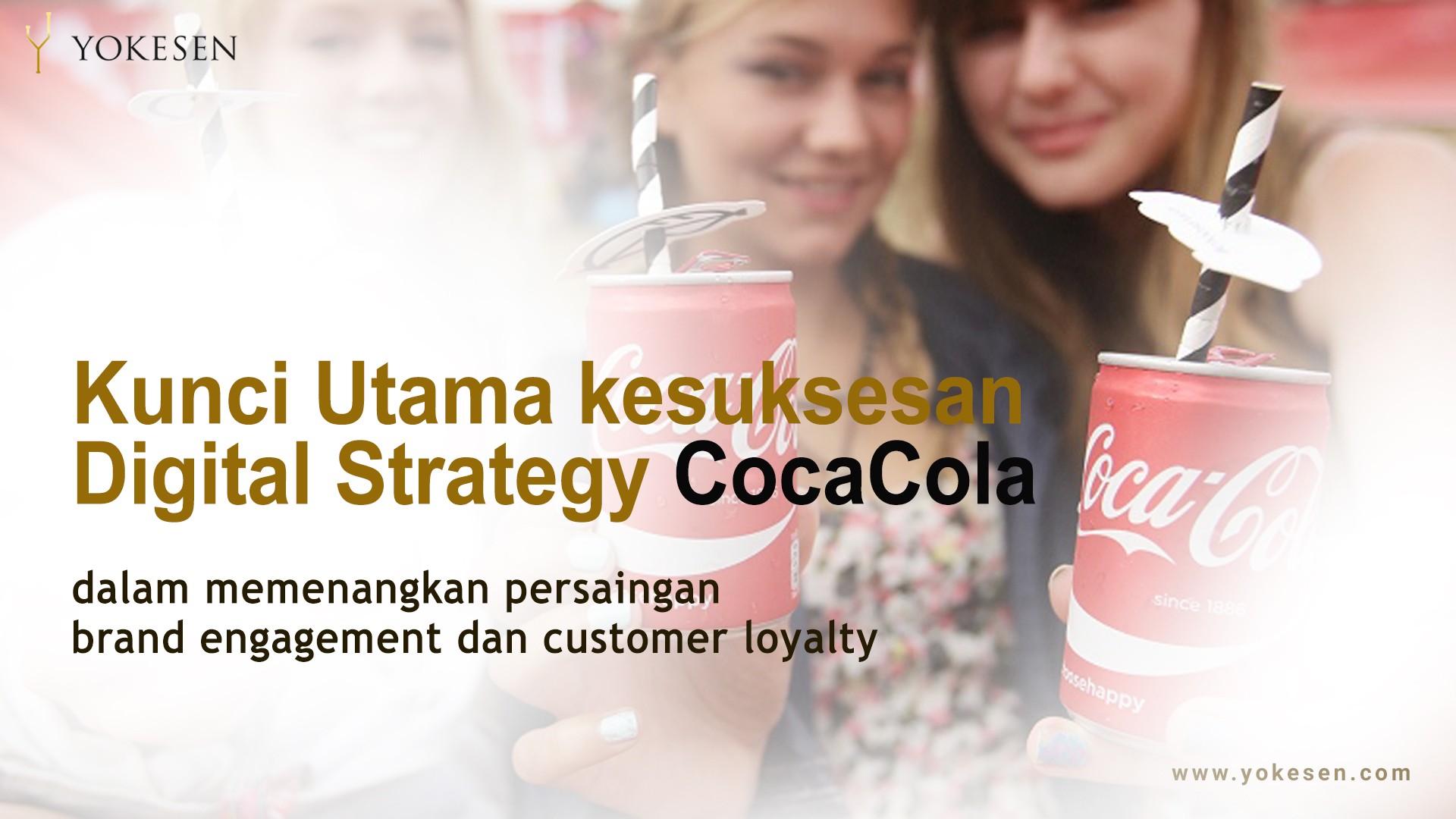
An important part of the success of Coca-Cola's digital marketing efforts is its emphasis on the brand rather than the product. Coca-Cola does not sell soda drinks in bottles, but instead sells happiness or "Happiness" in a cold drink bottle.
Coca-Cola has an objective to sell consumer-experience and lifestyle to consumers. However, there are several main keys to the success of Coca-Cola's Digital Strategy, namely:
1. Consistency
Across decades, and countless marketing campaigns, Coca-Cola has remained consistent in communicating one strong message, with timeless and simple slogans like “Enjoy” and “Happiness” that never go out of style and are not difficult to translate into any language around the world.
2. Go Global, Act Local
Although the Share a Coke Campaign was a huge success in Australia initially, it was not immediately successful in more than 50 other countries. Coca-Cola strategically personalized offers in each country by adapting local culture and language, and printed on cans and bottles. This campaign is an example of a #brandpositioning strategy for a global brand that acts locally effectively.
3. Apply Socially
Social media is one tool that gives many businesses the ability to reach consumers all over the world. The Share a Coke campaign was also successful in utilizing social media to build consumer engagement and encourage consumers to share their experiences about CocaCola with many people.
Quoted from the Wall Street Journal, there were more than 125,000 posts shared within a month after the campaign was released in the United States
Also read the case study of what world brands are like Asics in winning customer loyalty, and how we develop the right digital strategy and technology implementation strategy for every business and industry.
04 Oct 2021
What are the most appropriate Cloud Warehouse System criteria for your business when choosing a marketplace solution?
When deciding to outsource the fulfillment department, it is important for you to look for a solution that does not just have a conventional manual pick, pack and ship business model as is widely available today.
The best solution is one that is able to integrate all aspects of the purchasing chain to logistics, with the use of technology and system automation. This digital transformation approach to the fulfillment area will help your business store stock of goods, analyze projected stock needs at each warehouse point through marketplace integration, and finally deliver consumer orders most quickly and cost-efficiently through expedition courier integration.
And more importantly, if this technology provider is able to provide marketplace integration, multiplatform integration, payment gateway integration and holistic expedition integration to help strengthen the business digitally from branding, marketing, logistics to sales.
Ultimately, the goal of any business or brand is to be efficient in producing, selling, distributing and delivering the products that customers want, as quickly as possible.
In fact, today's digital consumers want delivery options that best suit their needs.
Offering a choice of fast and moderate delivery options allows consumers to choose according to their budget and time constraints.
45% of consumers say that they have left a business/store that had poor delivery times, and 58% of consumers say that they buy from one store more often than another, because the store is able to meet customer expectations for fast delivery and prompt returns service.
Also read the article how DHL scaled-up 5x to find out a marketplace integration solution that is able to automate the online sales process and shorten order processing time to just 5 minutes.
Sep 30, 2021
Who doesn't know the Asics brand?
For decades, ASICS America Corporation has been synonymous with sportswear lines for tennis, volleyball and is now even a lifestyle symbol. ASICS is a sports shoe brand with millions of consumers worldwide.
However, Asics has never stopped improving their digital strategy navigating the ever-changing digital commerce landscape and has faced some significant challenges along the way.
Like all major brands, ASICS has long understood the importance of building a strong brand identity. Asics has a large product catalogue. Relying on one channel managing strategy every day is neither sustainable nor scalable.
As the ASICS business grew, it became clear that more support systems including the implementation of appropriate #technology were important to handle two important business aspects, namely: market management and digital marketing.
They have to find many methods to do what the strategy will do, for example: currently Asics advertises on three different search engines, and implementation of digital and technology strategies with help technology consulting company.
Many other brands are trying to follow Asics' strategy, but are overwhelmed when they have to handle everything with the existing internal team.
Also read How Starbucks Is Winning the Digital Marketplace
Sep 30, 2021
Did you know that 75% of buyers consider the return process to be the most painful part of online shopping?
That's why good customer experience management is expected to go far beyond what consumers see in your digital and offline storefronts throughout the customer journey cycle. But, the return process doesn't have to be a point of frustration for your customers. With the right processes and technology, it can actually become a point of customer retention.
So how do you do it?
1. Provide a fast, easy and online digital platform! An online self-service goods returns page is a must-have on every digital commerce website.
2. And the return process page should make it easy for customers to see how much will be refunded for each item they return and allow them to provide feedback about the reason for the return.
3. This will allow you to collect data for your team about the reasons for returns (size problems, not matching the description, etc.)
4. On the other hand, your consumers will feel heard in submitting any complaints. Feedback regarding returns can help you improve the quality of service and prevent unnecessary returns from occurring in the future.
5. Digital solutions such as consolidated ecommerce dashboards such as CED (Consolidated Ecommerce Dashboard) and Teratur, will make it very easy for you to track every point of consumer interaction with your business. And any obstacles and problems that result in the return of this item will be easy to track and repaired quickly.
Further articles about insights into technology created a customer retention management system that businesses need by using a cloud warehouse solution that is integrated into many large e-commerce sites in Indonesia.
Sep 30, 2021