Back to discussing gamification.
More and more businesses are creatively implementing Gamification Marketing strategies to increase consumer engagement as well as their employee engagement strategies, which are designed in a human-oriented manner (i.e. designs that are optimized for human motivational purposes rather than for functional efficiency).
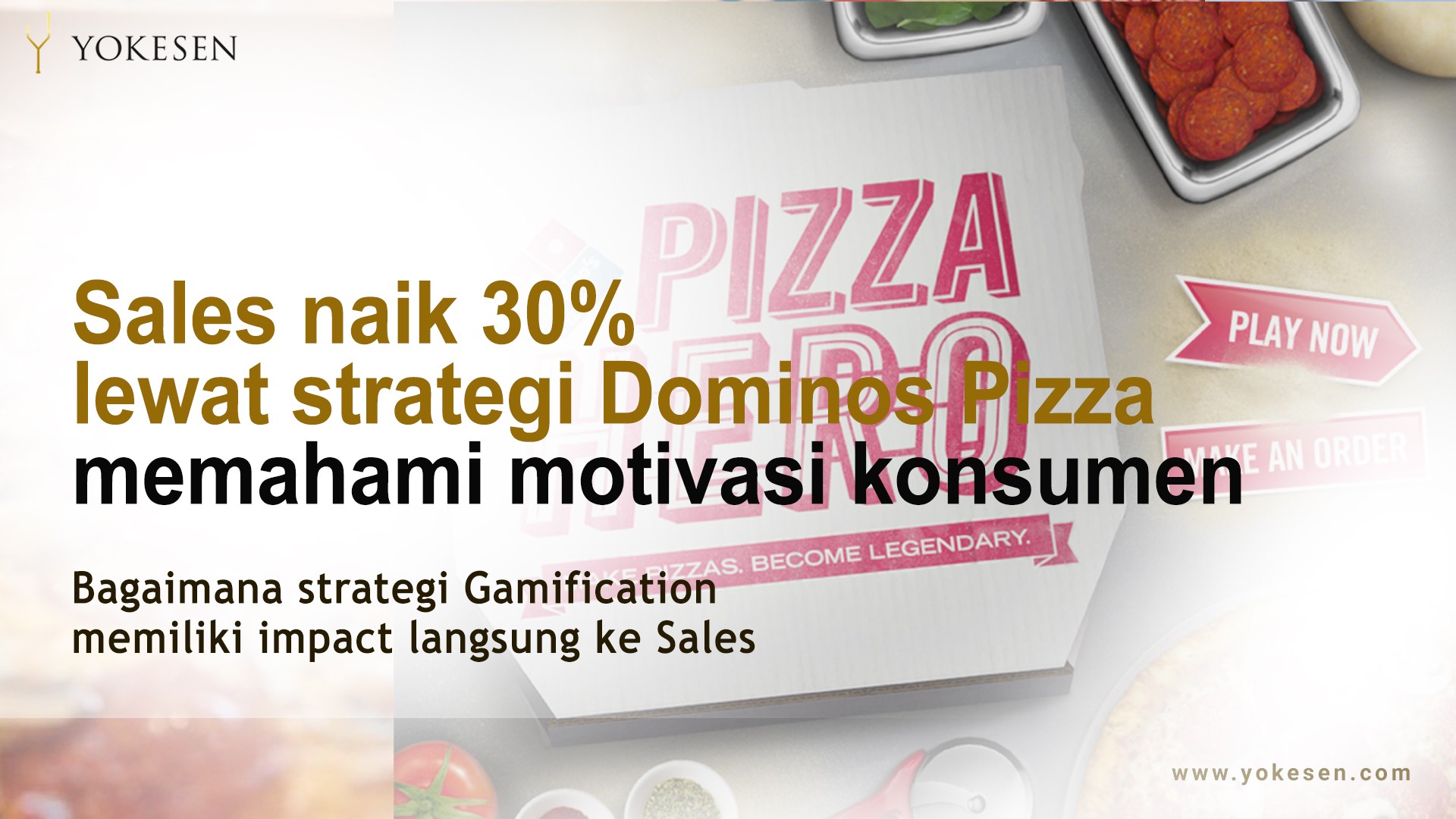
This time what we will discuss is one of the most interesting examples of implementing gamification strategies in the F&B (Food and beverages) industry, namely the #PizzaHero campaign by Dominos Pizza.
Even though the Pizza Hero campaign was developed solely as a consumer experience for fun, the result was an increase in sales of 30%.
There were more than 7 million pizzas made through the app which at that time was ranked 3rd in the app store after being downloaded 300,000 times.
Why has this Gamification been so successful?
1. The first factor, Dominos Pizza through its #PizzaHero gives consumers a feeling of achievement by giving them points and also an assessment score for how good the pizza they make is.
2. In addition, as users become more skilled at making pizza, it makes them feel like they have learned and mastered a new skill, namely making pizza (gamification elements: Self-development and achievement).
3. When users make pizza, they feel ownership of their work and are proud of their abilities (gamification elements: self-actualization & sense of ownership).
A gamification strategy that focuses on human motivation and consumer behavior, is able to provide a sense of self-development, social status, and a sense of ownership that can be shared with other users, and this is very dependent on the consumer's extrinsic motivation.
So it's not surprising that brand engagement here is built quite strongly.
Also read other insights around usage technology and digital strategy in the form of gamification which you can apply to your brand.