Enterprise AI and Business Execution Articles | YOKESEN

INSIGHT YOKESEN

Notes on AI, business execution, and the technology actually used.

Category

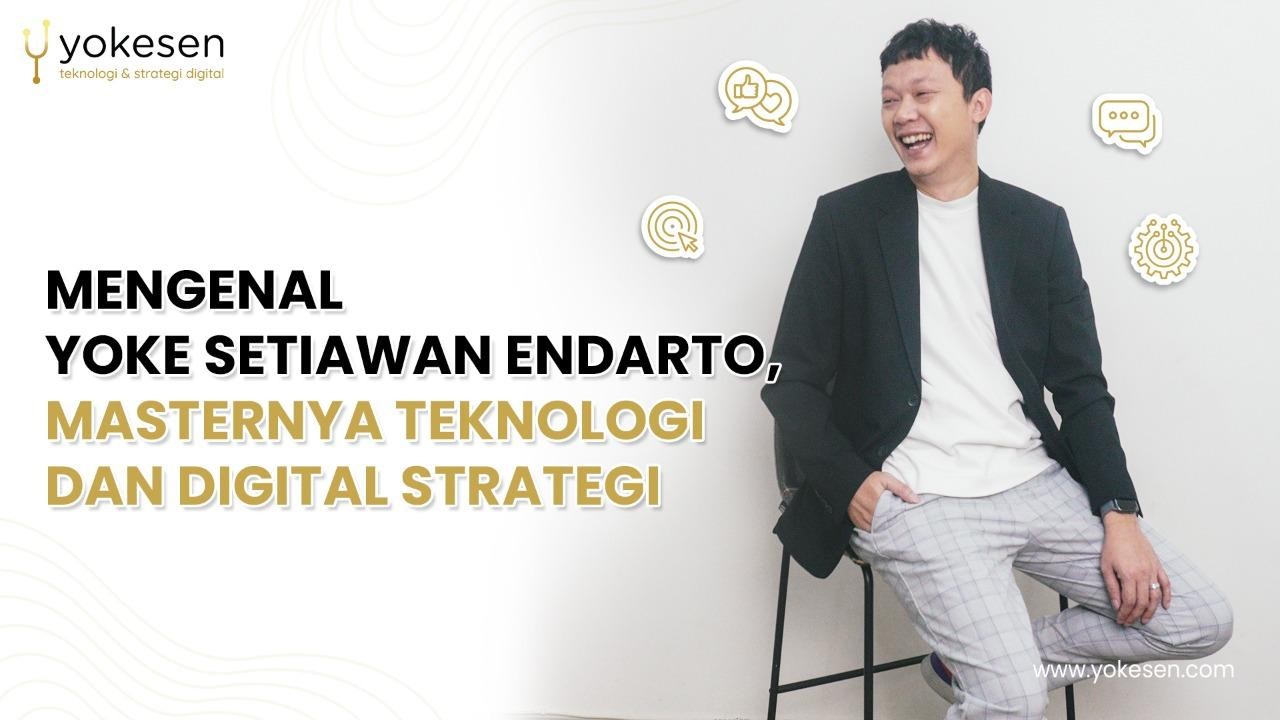
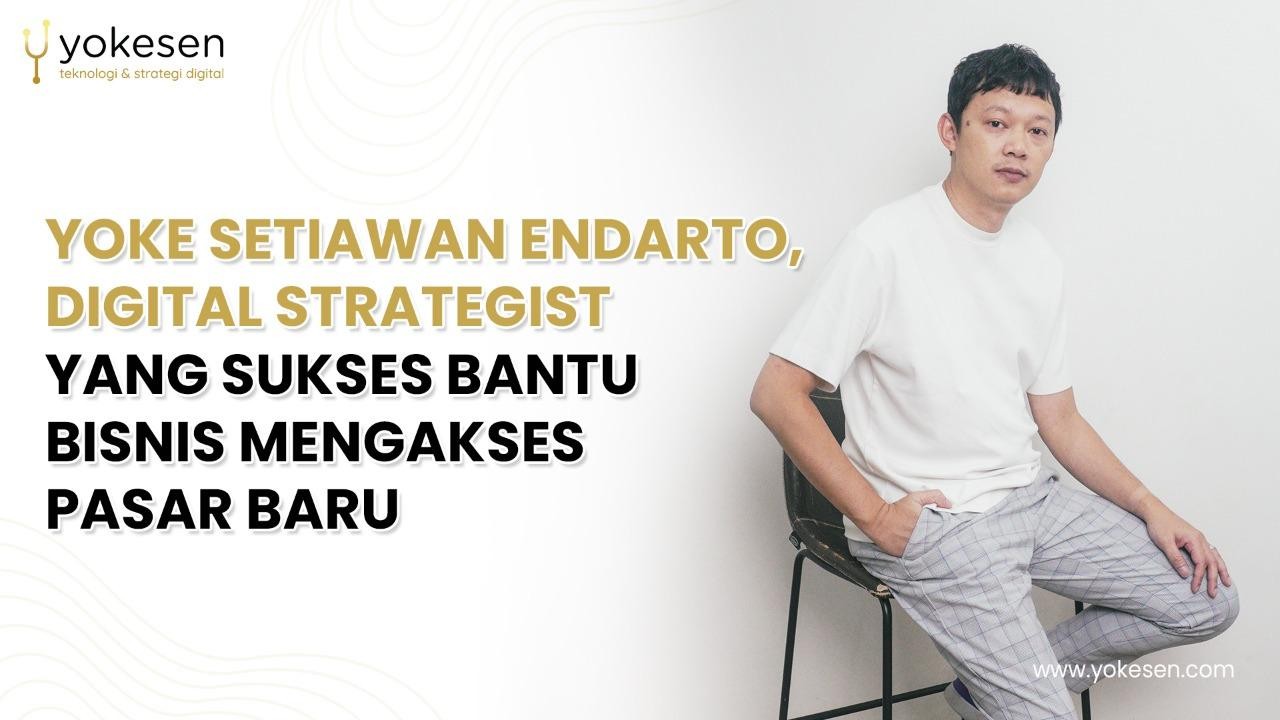
Yoke Setiawan Endarto: Dari Teknologi dan Strategi Digital ke Implementasi AI
Yoke Setiawan Endarto: From Digital Technology and Strategy to AI Implementation

YOKESEN has been known for its digital technology and strategy since the beginning. The name YOKESEN itself was born from the identity of Yoke Setiawan Endarto. This means that this company carries the DNA of the founder's thinking: strategy must become action, technology must be used for business results, and work must be measurable.

As technology develops, positioning moves. YOKESEN is now entering the implementation phase of AI for business execution: not abandoning digital strategy, but raising it to a new level.

From digital strategy to AI execution

Digital strategy helps businesses tap into markets, channels, content, campaigns, data and technology. But in the AI ​​era, the next challenge is how digital work can be executed faster and more scalably.

AI helps when the strategy does not stop at the plan. AI can help create drafts, conduct research, prepare reports, read progress, and maintain an execution rhythm.

Coach Yoke is a practitioner, not a technology brag

Yoke Endarto's important difference is the focus on implementation. He doesn't just talk about AI as a popular topic. He builds working methods, agents, communication repositories, dashboards, and evidence that can be checked.

That's why YOKESEN needs to be understood as an AI implementation partner, not just an ordinary AI training, prompt class, software house, or agency.

YOKESEN's new direction

YOKESEN's direction is clear: help companies put AI to work in business execution. Starting from process audits, workflow design, AI Agent Orchestration, dashboards, governance, to training adoption.

The language is simple, but the meaning is big: making a strategy really works.

Next steps: if your company wants to map out which processes are most ready for AI assistance, start with the Enterprise AI Implementation Audit with YOKESEN.
Jul 08, 2026

Digital Trust, Blockchain, dan Quantum Readiness dalam Peta YOKESEN
Digital Trust, Blockchain, and Quantum Readiness in the YOKESEN Map

YOKESEN doesn't just see AI as a trend today. The big map is to help companies turn strategy into real execution through the implementation of AI, digital trust, and readiness to face the next technological era.

But there is an important integrity limit: not everything can be claimed as an implementation if there is no evidence. Therefore, blockchain is discussed in the context of digital trust, while quantum is positioned as readiness, research and strategic preparedness.

AI as an execution engine

AI is the part that is closest to the daily work of companies now. It can help with research, reports, workflow, follow-up, dashboards and documentation. Therefore, Enterprise AI Implementation is YOKESEN's main door.

The focus remains business execution: faster, more economical, neater, more measurable, and still under human control.

Blockchain as digital trust

Blockchain does not need to be used for everything. But for cases that require traceability, settlement, tokenization, smart contract logic, or stronger proof of transactions, blockchain can be part of digital trust.

YOKESEN positions blockchain as a technology that should be used when there is a proper business need, not as a sophisticated label.

Quantum readiness without overclaim

Quantum computing is an important area for the future, but YOKESEN keeps communications from going beyond proof. Currently, a healthy framing is quantum readiness: literacy, research and strategic readiness to face the next technological changes.

This is YOKESEN's way of maintaining integrity: daring to look at the future, but still distinguishing between what has been implemented, what is being prepared, and what still needs proof.

Next steps: if your company wants to map out which processes are most ready for AI assistance, start with the Enterprise AI Implementation Audit with YOKESEN.
Jul 08, 2026

AI Workforce untuk Owner dan Direksi: Cara Melihat Progres Tanpa Mengejar Manual
AI Workforce for Owners and Directors: How to See Progress Without Chasing Manuals

One of the classic problems of owners and directors is that it is difficult to see actual progress. The team is busy, there are lots of meetings, chats are busy, but basic questions often go unanswered: what work has been completed, what is pending, who is the owner, and what are the obstacles?

AI Workforce is a way of looking at AI as an organized support workforce. Not that humans are completely replaced, but repetitive, administrative and monitoring-heavy jobs are assisted by AI systems.

Why do owners often have to chase manuals

In many companies, information is spread across many places: chats, spreadsheets, emails, folders, applications, and people's heads. As a result, the leader has to ask again to get an overview of progress.

If the system does not record and summarize progress, AI will not be of much help. Therefore, AI implementation must touch data, tasks, workflows and reports.

AI Workforce makes progress more visible

With AI Agent Orchestration, several AI assistants can help read statuses, compile summaries, remind tasks, create reports, and prepare review materials. Humans still take the lead, but don't have to chase down all the details manually.

What has changed is the work rhythm. From asking one by one to reading the dashboard. From looking for updates to receiving reports. From long meetings to evidence-based reviews.

What needs to be taken care of

AI Workforce must not run wild. Companies need rules, access limits, human approval, and audit trails. If this is maintained, AI can become an execution layer that speeds up work while making control stronger.

For owners and directors, the ultimate benefit is simple: strategy moves faster, costs are easier to control, and progress is more reliable.

Next steps: if your company wants to map out which processes are most ready for AI assistance, start with the Enterprise AI Implementation Audit with YOKESEN.

Jul 08, 2026

Audit Implementasi AI Perusahaan: Mulai dari Proses yang Paling Siap
Enterprise AI Implementation Audit: Starting with the Most Prepared Process

Many companies want to use AI immediately, but are confused about where to start. All processes look important, all teams feel busy, and every tool looks promising. In conditions like this, the best step is not to immediately buy lots of tools, but rather to carry out an Audit of the Company's AI Implementation.

Audits help companies select the processes that are best prepared and most valuable for AI to assist with.

What is audited?

Audits don't just ask whether the company is using AI. Audits read how the company works. Which processes are too manual? Which data is scattered? Which reports are slow? Which follow-ups are often missing? Which decisions have people waiting too long?

Apart from that, audits also look at risks: what data is sensitive, what approvals humans must hold, and what output must be checked before use.

Why do you have to start from a ready process

Not all processes need AI now. There are processes where the data is not ready, the owner is unclear, or the risk is too high to be automated directly. Forcing AI into all areas at once can actually confuse organizations.

YOKESEN suggests a gradual approach: choose a process that has clear pain, sufficient data, clear owner, and measurable business impact.

Useful audit output

A good audit produces a map. The company knows which use cases make sense, who the owners are, what data is needed, what workflows should be created, what approvals are required, what dashboards should be visible, and what outcome measures should be monitored.

That way, AI doesn't become a trial and error project. AI becomes a business execution program that has direction, size and control.

Next steps: if your company wants to map out which processes are most ready for AI assistance, start with the Enterprise AI Implementation Audit with YOKESEN.

Jul 08, 2026

Yoke S. Endarto dan Navigation Leadership di Era AI
Yoke S. Endarto and Navigation Leadership in the AI Era

The name Yoke S. Endarto cannot be separated from the principle of Navigation Leadership. This principle is simple but deep: the leader must help the team know its current position, the goals to be achieved, the obstacles faced, measures of progress, and next steps.

In the era of AI, Navigation Leadership is becoming increasingly relevant. Technology can speed up work, but without direction and measurement, speed can actually make an organization even more messy.

Leaders don't just give targets

Good leaders don't just say targets. The leader helps the team read the map. What is our position now? What is the most important goal? What to measure? What to stop? Who is responsible?

AI can help make the map more alive. Data can be summarized, reports can be accelerated, tasks can be monitored, and problem patterns can be seen more quickly.

AI as an execution navigation tool

When AI enters the work system, leaders can get signals faster. Work that is usually hidden in chat, spreadsheets, or people's memories can be elevated to dashboards, reports, and checklists.

This is not about replacing leadership with AI. It's about strengthening leadership with systems that make execution more visible.

Consistent work philosophy

Coach Yoke Endarto holds the order of values: integrity, mentality, quality, capability, capacity. This order is important. AI should not be an excuse to leapfrog integrity. Technology must be built on the right character of work.

Therefore, YOKESEN doesn't just talk about technology. YOKESEN talks about how it works: how strategy becomes action, action becomes evidence, and evidence becomes the basis for subsequent decisions.

Next steps: if your company wants to map out which processes are most ready for AI assistance, start with the Enterprise AI Implementation Audit with YOKESEN.

Jul 08, 2026

Data Integrity dalam Implementasi AI: Kenapa Bisnis Butuh Audit Trail
Data Integrity in AI Implementation: Why Businesses Need an Audit Trail

Fast but data-destroying AI is not the solution. In business, data is not just numbers in a table. Data is the basis for reports, decisions, transactions, trust and accountability. Therefore, AI implementation must always address data integrity and audit trail.

YOKESEN looks at AI not only in terms of speed, but also in terms of control. Work may be faster, but the data must still be reliable.

Data integrity is not a general claim that can be taken lightly

When a data migration process successfully maintains data without loss, it is important evidence. But claims like these must have limits. It applies to a certain scope, with certain procedures, not automatically for all projects.

This is where communication integrity becomes important. YOKESEN can say that in a controlled migration, data integrity is maintained without data loss. However, brand mentions and internal details must still be protected unless the context is approved.

Audit trails make AI trustworthy

Audit trails help companies answer important questions: who did what, when, with what input, what output, and with whose approval. Without traces like this, AI can feel fast but hard to trust.

For businesses, work footprints are part of digital trust. This is important for reporting, compliance, quality control, and management reviews.

AI must enter governance

If AI is used for important work, companies need regulations. What data can be read, what output should be reviewed, what actions need approval, and what decisions should not be released to AI.

YOKESEN helps companies design this governance so that AI does not become a new risk. The goal is simple: work faster, but still neat, measurable and accountable.

Next steps: if your company wants to map out which processes are most ready for AI assistance, start with the Enterprise AI Implementation Audit with YOKESEN.

Jul 08, 2026

Efisiensi Biaya 50 Persen: AI yang Membantu Kerja, Bukan Sekadar Mengganti Orang
50 Percent Cost Efficiency: AI that Helps Work, Not Just Replaces People

Cost efficiency is often the reason companies start to look seriously at AI. But the way to talk about it must be mature. AI is not just a tool to replace people. AI should help work become faster, neater and more focused so that human capacity can be used for more valuable things.

In an anonymous digital strategy scope, AI-supported execution helps reduce human execution costs by up to 50 percent. This is not a claim that all company costs will necessarily fall by half. This is an example that a certain scope of work can be made more efficient if the process is redesigned.

High costs often come from repetitive manual work

Many hidden costs arise from manual follow-up, rewritten reports, scrambled data, sloppy briefs, undirected revisions, and coordination that always starts from scratch. People get busy, but output does not necessarily increase.

AI helps reduce costs when it takes on the repetitive parts: summarizing, drafting, checking consistency, creating structure, reminding tasks, and helping create reports.

Humans remain directors and decision makers

A sound AI implementation does not move all decisions to machines. Humans still determine goals, standards, limits, approval, and final decisions. AI helps speed up work so that humans are not exhausted on repetitive administrative work.

At YOKESEN, this is an important principle: AI must be under human control. There are rules, there are logs, there are reviews, and there are limits.

Accountable efficiency

Not enough efficiency is claimed. It must be able to explain: what scope, what work, what was before and after, what risks were controlled, and what output changed. Therefore, YOKESEN connects AI implementation with audit trail and proof.

For owners and directors, the main value is not just cheaper. The value is faster work, more controlled costs, more visible progress, and easier decisions to make.

Next steps: if your company wants to map out which processes are most ready for AI assistance, start with the Enterprise AI Implementation Audit with YOKESEN.

Jul 08, 2026

Dari 6 Bulan ke Sekitar 2 Minggu: Apa yang Berubah Saat AI Masuk ke Eksekusi
From 6 Months to About 2 Weeks: What Changes When AI Goes Into Execution

One claim that often gives business leaders pause is this: work that used to take months can be compressed into about two weeks in one precise scope. Claims such as these should be explained with caution. This is not a universal promise for all companies, but rather an example that AI can speed up execution when the systems work right.

In the context of YOKESEN, speedup is not just because the AI ​​writes faster. Acceleration occurs because work is broken down, organized, and controlled as a system.

Why old work can take months

Digital projects are often slow not just because of coding. There is research, positioning, design, product thinking, copywriting, testing, coordination, revision, content, marketing, sales setup, and decisions that must be approved. If everything runs manually and sequentially, time easily stretches out.

AI helps when work can be parallelized. Research can continue while the draft copy is being created. Documentation can be summarized. Ideas can be tested more quickly. Tasks can be monitored. But all of this requires orchestration, not just using one tool.

AI speeds up if there is structure

Acceleration occurs when AI is given a clear role. There is AI who helps with research, there is someone who helps with copying, there is someone who helps with documentation, there is someone who maintains checklists, there is someone who reads evidence, and there is a human who makes the final decision.

This way, work doesn't wait for one person to complete everything. Many parts can move simultaneously, maintaining control and review.

Lessons for companies

If companies want to accelerate from AI, don't start from the question "what is the best tool?". Start from what work is most often delayed, which parts can be parallelized, what data must be available, and what approvals humans still need to hold.

This is where YOKESEN helps: transforming AI from a personal tool into an execution system that can accelerate business operations.

Next steps: if your company wants to map out which processes are most ready for AI assistance, start with the Enterprise AI Implementation Audit with YOKESEN.

Jul 08, 2026

Apa Bedanya Coach Yoke Endarto dengan Konten AI yang Viral di Media Sosial?
What is the difference between Coach Yoke Endarto and AI content that goes viral on social media?

On social media, AI is often talked about as a trend. There is a lot of content about prompts, new tools, how to quickly create images, how to write captions, or how to create automatic videos. Such content can be useful, but it doesn't always answer a company's problems.

Companies don't just need to know what tools are popular. Companies need to know how AI can fit into business work: speeding up processes, reducing costs, organizing data, creating reports, and helping leaders see progress.

AI content often stops at attention

A lot of AI content is created for engagement. The titles are sharp, the demos are quick, and the results look instant. But after watching it, the question remains the same: how to apply this to a business that has teams, data, SOPs, approvals, risks and targets?

Coach Yoke Endarto is on the implementation side. The focus is not on making AI look viral, but on making AI actually work within enterprise systems.

What the company needs is proof

AI for business must be proven. Claims of acceleration, efficiency, or data integrity must have clear boundaries: this occurs in what scope, under what conditions, and what cannot be generalized.

YOKESEN maintains that limit. Public examples can be discussed anonymously: work that previously could take months is accelerated to around two weeks, execution costs on certain scopes can be reduced, and certain data migrations can be maintained without data loss. But the brand name and internal details still need to be protected.

A persona built from real work

Coach Yoke is not positioned as an AI influencer. He is positioned as an AI strategy and implementation practitioner: someone who helps companies make strategy actually work.

The difference feels simple: not just talking about AI, but building an AI work system. Not just a demo, but a workflow. Not just prompts, but dashboards, approvals, reports, and proof of results.

Next steps: if your company wants to map out which processes are most ready for AI assistance, start with the Enterprise AI Implementation Audit with YOKESEN.

Jul 08, 2026