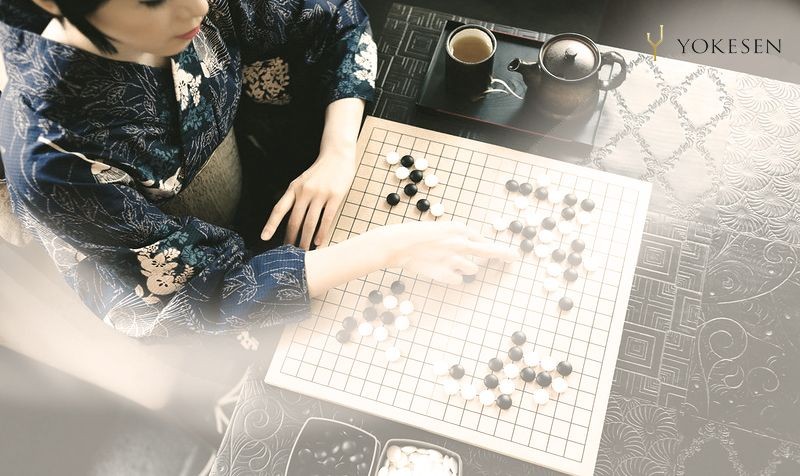
GO is not just a game. GO also serves as a life analogy, a method for mediation, an exercise in abstract reasoning, or even as an insight into the player's personality traits.
This ancient board game from East Asia is played by two players on a 19x19 wooden board with black and white stones. Stones are used to surround other stones to capture them or to mark territory, with 10 to the power of 170 possible configurations on the board.
The game values patience and balance over aggression and greed, the balance of influence and territory can change many times during the game. And when #Google's AI, #AlphaGo beat the best player of the decade, it was a great moment for the future of #technology. AlphaGo defeated Lee Sedol, winner of 18 world titles, in four of five matches at the 2016 tournament, losing to DeepMind's AlphaGo program.
AlphaGo uses what the company calls "Deep Learning" to build its own understanding of the game. It can then choose the move it deems most likely to win. When teaching a computer to play a game, the simplest method is to tell the computer to rank every possible move during the game, from best to worst, and then instruct it to always choose the best move.
The program involves two neural networks, software that mimic the structure of the human brain to combine very simple decisions into complex choices, running in parallel.
AlphaGo's victory over the World Champion of the Decade is the best analogy that #MachineLearning and #AI can be a #forcemultiplier in making decisions many times faster and more adaptive than the capabilities of the human brain with all its limitations.
Ultimately Google's mission is to apply these #DeepLearning intelligence techniques to solve critical real-world problems, from medical diagnostics to climate modeling.